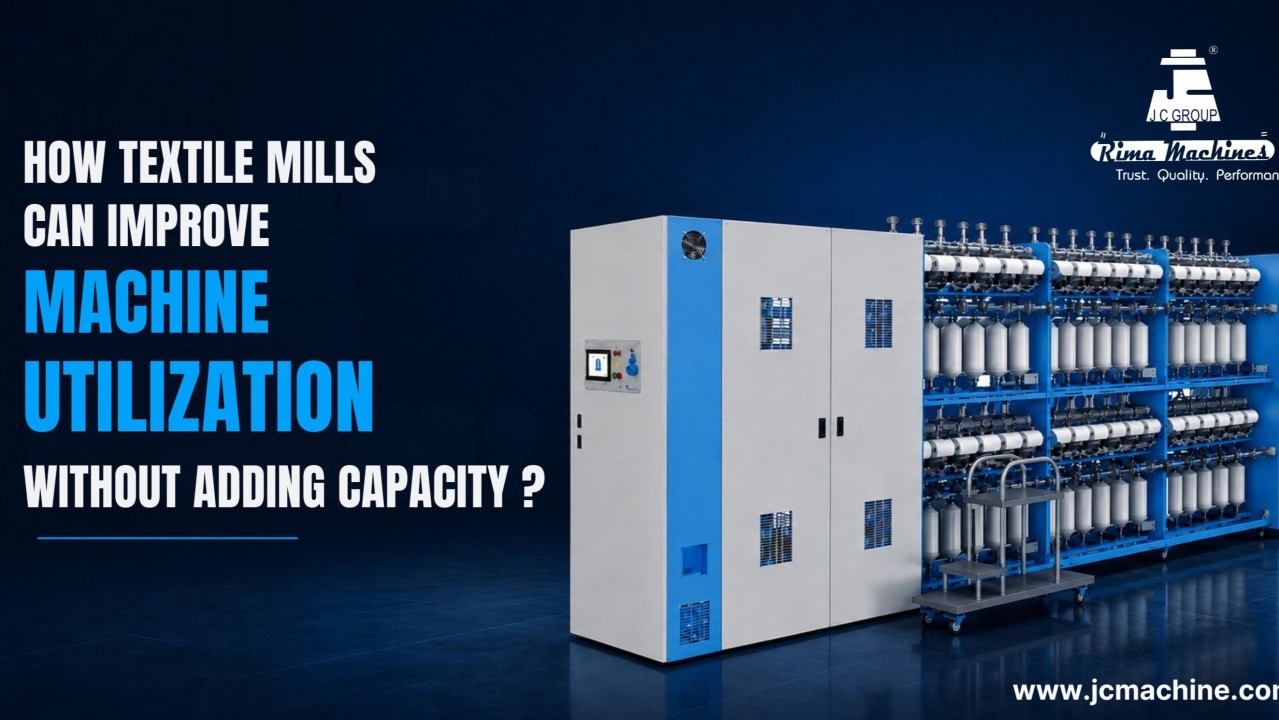

The textile industry today is becoming highly competitive; however, the parameter of measuring success is not just the scale of production, but consistent quality. Similarly, often increasing production in a manufacturing unit is understood as expanding the machinery, but rising energy costs, labour shortages, and tighter delivery schedules often intervene with the expansion plans. This brings the textile manufacturers to a point of introspection: whether they add capacity or whether they improve their existing machine to boost their production by improving utilization.
The good news is that many mills can significantly improve machine utilisation—and overall productivity—without adding a single new machine.
Adapt these five practical strategies that can help you.
1. Reduce Machine Downtime
An idle machine means lost production. Unplanned breakdowns, delayed maintenance, and long setup times all reduce utilisation rates. Rather than maintaining the machine during a breakdown, implementing preventive maintenance is a smart approach. Monitoring machine health and routine inspections can minimise unexpected stoppages. Well-maintained equipment runs longer and delivers consistent quality.
2. Optimise Workflow and Material Handling
Production is not just affected by machine downtime, but also due to inefficient movement of materials between processes. The wait for fabric rolls, cones, or finished goods often leaves expensive equipment standing idle. This requires improving shop floor layout, streamlining material flow, and synchronising production schedules to ensure machines receive continuous work.
3. Minimise Changeover Time
As the trend changes, styles, colours, and batch sizes also vary, requiring machine adjustments. Although some changeovers are unavoidable, better planning and standardised procedures help to reduce their duration. Grouping similar production orders, preparing tools and materials in advance, and training operators on efficient setup techniques can significantly reduce non-productive time.
4. Invest in Operator Training
The work is done by machines, but their upkeep and operation are in human hands. Skilled operators can identify minor issues before they become major problems, optimise machine settings, and maintain consistent production speeds. Regular training of the operators improves operational efficiency, reduces errors, and increases machine uptime, delivering higher returns on investment.
5. Upgrade Critical Processes Instead of Expanding Capacity
Mills fail to identify production bottlenecks and keep adding machines, resulting in zero output. When manufacturers work on efficient fabric inspection, rolling, batching, and finishing, the existing equipment can eliminate delays that affect downstream operations. When supporting processes become faster and more reliable, primary production machines needs less time waiting, resulting in higher utilisation across the entire facility. Currently, automation solutions also reduce manual intervention, improve consistency, and provide better production visibility, enabling mills to maximise the output of existing assets.
An upgrade in a manufacturing facility doesn’t always come from new equipment; it’s about running operations smarter. By reducing downtime, improving workflow, minimising setup losses, training operators, and upgrading bottleneck processes, textile mills can unlock hidden production capacity without major capital investment.
At Rima Machines, we understand that efficiency drives profitability. Our innovative textile machinery solutions are designed to streamline production, enhance workflow, and help mills achieve higher productivity with the infrastructure they already have. We aim for efficient use of machinery, giving the worth of an investment back to the businesses.