
Machine speed is often perceived as synonymous with production. Higher RPM, higher speed, and finally higher production. Seems convenient. Right? Well wrong…RPM alone does not define a machine’s capability. A machine can operate at high rotational speeds, but delivering consistent accuracy, stability, and productivity requires a carefully engineered system in which every component works together.
High RPM is only one part of high-speed performance. A machine must also manage cutting forces, heat generation, vibration, and positional accuracy. These factors, if not managed properly, can even lead to poor surface finishes, premature component wear, and reduced tool life at higher speeds. A high-speed capability means maintaining performance under demanding operating conditions.
The machine structure provides a foundation for stable high-speed operation. In an insufficiently rigid machine, cutting forces can cause unwanted deflection and vibration. A well-engineered structure minimises these effects, allowing the machine to maintain accuracy and produce consistent results even during demanding machining operations.
The spindle is another component of a high-speed machine. Its design should be synergistic with the required rotational speed while maintaining stiffness, thermal stability, and reliable power transmission. Spindle engineering includes appropriate drive systems, cooling arrangements, and operating parameters for dependable performance over extended periods.
Higher operational speeds require the machine to withstand high rotational speeds, operating loads, and thermal effects while maintaining precise alignment. This comes with the right bearing selection. Bearings help reduce friction, control vibration, and extend service life, but only when bearing arrangement, preload, and lubrication are optimised for high-speed applications.
Another consideration is the balance of the machine, because at high rotational speeds, even small imbalances can generate significant centrifugal forces. Proper balancing of rotating components helps reduce vibration and mechanical stress, resulting in improved operating smoothness, protecting critical components, and supporting consistent machining quality.
High-speed machines bring an image of high vibration with them. This can be tackled by accurate alignment of the spindle, drive system, and other moving components, which then helps to prevent uneven loading and unwanted oscillations. These factors support better surface finishes, improved dimensional accuracy, and longer component life.
Motors, drives, control systems, and feedback devices in a machine are needed to maintain accurate synchronisation to facilitate the coordination between mechanical and electronic systems. Effective coordination enables smooth acceleration, controlled deceleration, and precise motion, helping the machine operate safely and productively at higher speeds.
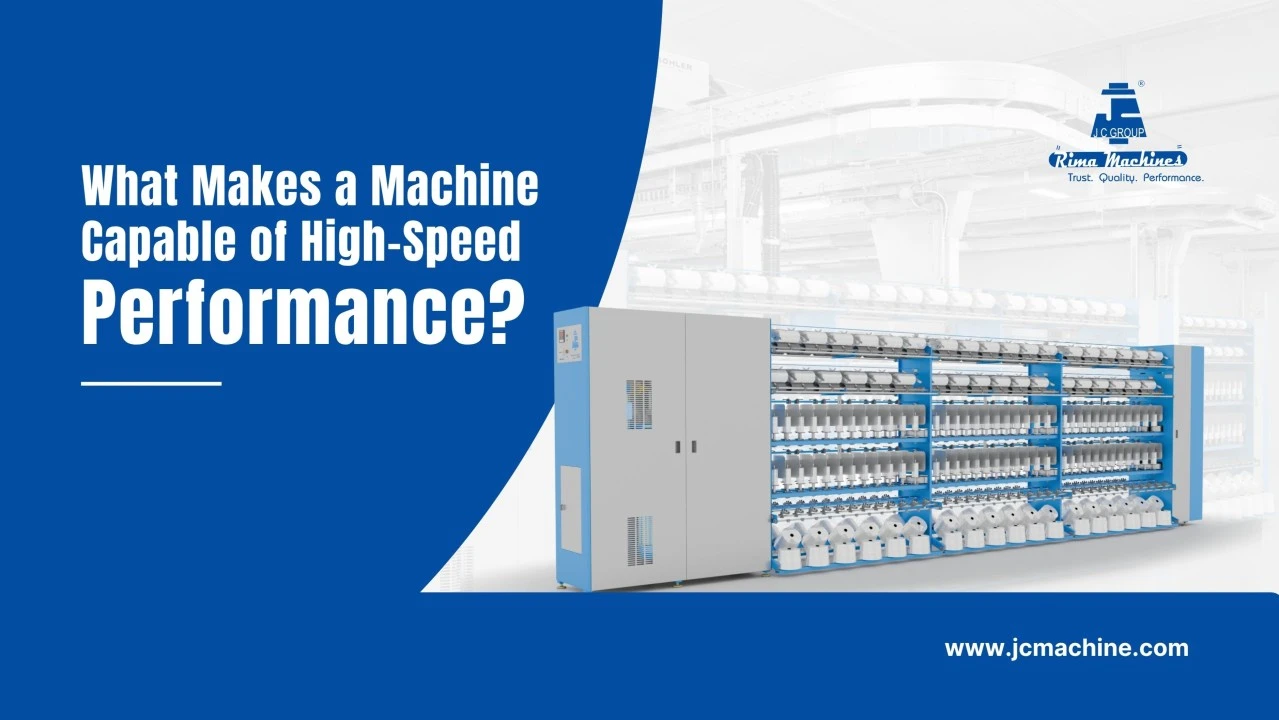
A high-speed machine is not just about the spindle RPM; rather, structure, bearings, balancing, alignment, thermal management, and control systems work in sync to put together a machine that delivers high production. And RIMA Machines exactly approaches the machine in this manner as a complete engineering challenge. Our goal is not to achieve higher RPM, but to deliver controlled speed, consistent accuracy, and dependable performance, and help manufacturers achieve long-term productivity.