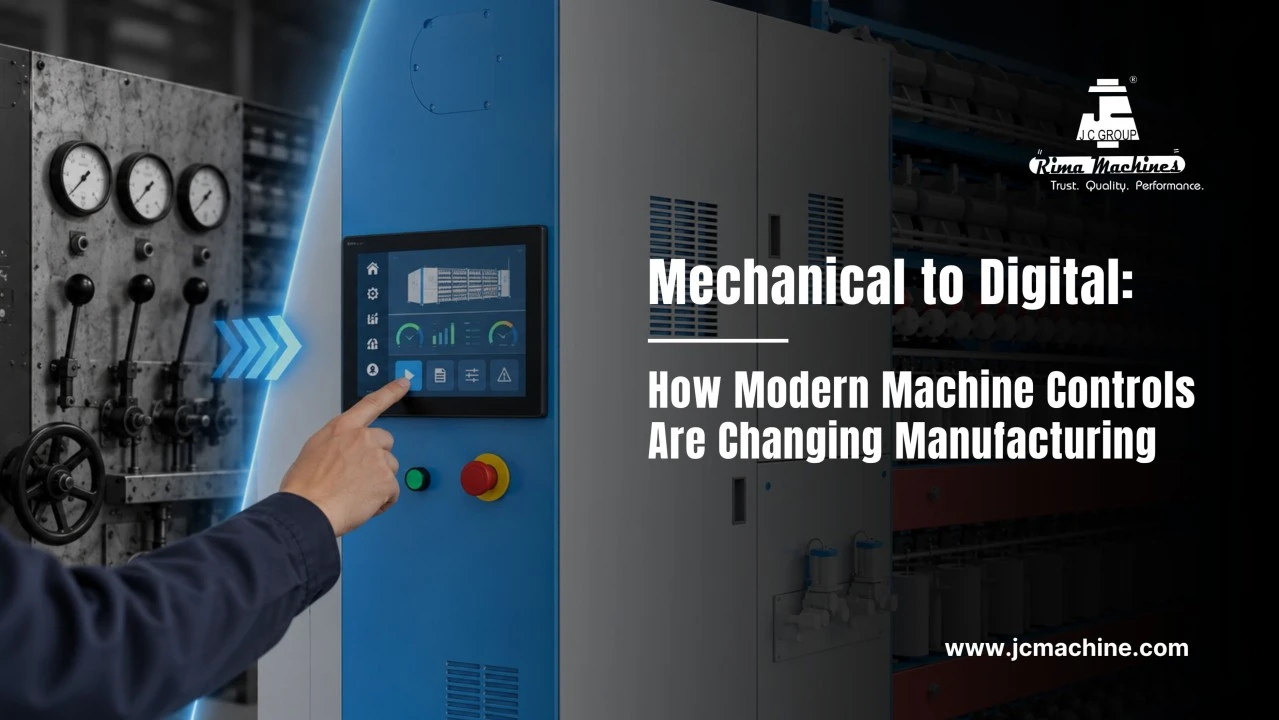

Traditional machines often depended on mechanical adjustments and operator experience. These methods were effective, but the setup was time-consuming and offered limited insights into the machine’s performance. A fully electronic machine changes it by controlling the machine through programmable systems, allowing motion, speed, timing, temperature, pressure, and other parameters to be coordinated with greater accuracy. This also allows the operators to make controlled adjustments through a centralised interface rather than multiple mechanical controls.
The Human-Machine Interface (HMI) is now an essential part of modern machine operation. A well-designed HMI provides operators with a clear view of machine status, operating parameters, alarms, and production information. In the same segment, servo motors and drives have transformed machine motion control, providing precise control over position, speed, and winding capacity. Textile manufacturers can achieve repeatable motion, faster response, and greater control over machine processes when accuracy and consistency are critical to product quality.
Digital control offers significant advantages, like parameter and recipe management. Parameters can be organised, stored, and adjusted through the control system, while predefined production settings can be used for manufacturing different products or formats. This can reduce setup time and help maintain consistency between production runs.
Modern electronic controls provide greater visibility into machine operation. Alarms, status indicators, diagnostic information, and performance data can all help operators and maintenance teams identify issues more efficiently. Unlike in traditional times, when the operator just knew the machine had stopped and troubleshooting took a long time, a digital control system often identifies where the problem occurred and what condition triggered it. This visibility leads to faster troubleshooting and more informed maintenance decisions.
The real value of digital technology lies in how effectively it serves the operator. At RIMA Machines, we focus on combining advanced electronic control with practical machine usability. We carefully design the control around the production process, giving operators access to essential functions while simultaneously keeping the overall experience straightforward.
Another consideration is mechanical design. Precision electronics, servo systems, and intelligent software work effectively when supported by a mechanically robust, accurately engineered machine. Digital control cannot compensate for weak mechanical design, and mechanical structure, motion systems, tooling, controls, and software should be designed as an integrated system.